


Career guidance is the support that helps you work out what to do after school. It covers self-assessment, exploring options, narrowing them down and making a plan. Good guidance starts years before you apply anywhere.
Most students leave this until Year 12. By then, subject choices have already closed some doors. At The ABC International School (ABCIS), we start the conversation much earlier.
This article explains career guidance for secondary students from Year 7 to Year 13. You will find practical steps, common mistakes and the fields worth exploring.
Key Takeaways
- Start before Year 10. Subject choices at 14 may shape what is available to you later.
- You do not need a final answer. You need a direction specific enough to act on this term.
- Test ideas, do not only research them. A week of work experience beats a month of reading.
- Skills travel further than job titles. Employers hire capability, not a subject list.
- Plans are meant to change. Revising one is progress, not failure.
What Is Career Guidance for Secondary Students?

Career guidance is structured help with a decision you cannot make from a textbook. It is guidance, not instruction. Nobody should be handing you an answer.
Most good programmes move through four stages.
- Self-assessment. Working out your strengths, interests and values.
- Exploration. Researching jobs, talking to people who do them, trying things.
- Narrowing down. Cutting a long list to a realistic few.
- Building a plan. Turning that into subjects, grades and deadlines.
You will go round this loop more than once. That is how it is supposed to work.
Why Career Guidance Matters for High School Students
The Decisions Come Earlier Than You Think
Your iGCSE choices at 14 can affect your A Level options at 16. Those options can affect your degree choices at 18. Very few people point this out at the time.
What You Actually Gain
- A clearer academic plan, so your subject choices support each other instead of competing.
- Strengths built on purpose, rather than ones you happen to discover by accident.
- Less wasted time and money, because changing direction after starting a degree is expensive.
- More confidence at 18, because the decision was tested rather than guessed.
The Labour Market Keeps Moving
Jobs have changed shape since your parents chose theirs. Some of the roles you will eventually do do not exist yet. Flexibility is worth more than false certainty.
Why It Matters More in Vietnam
Family expectations carry real weight here, and that is not a bad thing. The difficulty starts when nobody has the conversation out loud.
Studying overseas adds another layer. Entry requirements differ by country, so your planning has to start earlier than a classmate staying local.
Coming back to Vietnam afterwards is its own plan. Some professions recognise overseas qualifications more readily than others, so check that early.
Why Employers and the Wider Market Matter to Your Choice

Career guidance is not only about you. Understanding what sits on the other side of the decision makes your own choice sharper.
What Employers Are Actually Short Of
Employers recruit for capability, not for job titles. Many struggle to fill roles that need technical skill combined with strong communication.
That gap is an opportunity. A student who can do the technical work and explain it clearly is rarer than you might think.
Why Some Fields Are Crowded and Others Are Not
Popular fields attract more graduates than there are openings. Others go understaffed because fewer students consider them.
This is worth checking before you commit. Ask which roles employers in that field find hardest to fill.
What This Means in Vietnam
Vietnam’s workforce is still rebalancing as industries grow at different speeds. Some sectors expand faster than training can supply them.
You cannot time this perfectly, and you should not try. But knowing where demand sits helps you pick between two options you like equally.
Why Good Guidance Helps More Than Just You
When students choose work that genuinely suits them, they stay in it longer. Fewer people retrain at 25 because the first choice was someone else’s idea.
What Career Guidance Looks Like at Each Stage of Secondary School
Years 7 to 9: Exposure and Curiosity
Nothing is binding yet, which makes this the cheapest time to experiment. Try subjects and school clubs you would not normally pick. Ruling things out counts as progress.
Years 10 and 11: Breadth First
At Key Stage 4, most students take eight iGCSEs, or nine with Additional Mathematics. English, Mathematics and Double Science are compulsory, so a strong core is built in. Use your options to test interests across creative subjects and social sciences..
Years 12 and 13: Applications and Entry Requirements
By Key Stage 5 you are down to three or four subjects. Check what A Levels are required for any degree you are considering before you commit.
10 Ways to Help You Choose the Right Career Path
- Audit your actual strengths. Ask teachers what you are good at, not only where you score well.
- Separate interest from aptitude. Enjoying a subject is not the same as suiting the job behind it.
- Research the day, not the title. Find out what the work involves hour to hour.
- Talk to someone doing it. Fifteen minutes with a professional beats hours of reading.
- Get real experience. Work experience, volunteering and holiday jobs all count.
- Check what it requires. Note the subjects, grades and length of training before committing.
- Look at the money honestly. Salary and training costs are fair things to weigh up.
- Build a backup. Keep a second option that uses the same subjects.
- Have the family conversation. Explain your reasoning, not only your conclusion.
- Write it down. A plan you can see is a plan you can revise. SMART goals give it a shape worth returning to.
The Skills Careers Are Actually Built On
Job titles change. The capabilities underneath them do not. These are the ones worth building now.
Self-Awareness
Every stage above starts here. Strong self-awareness is what stops you choosing a path because it impressed someone else.
Communication
Interviews, applications and the first year of any job all run on it. Building communication skills early pays back across every field on this page.
Research and Problem-Solving
Careers research is research. Solid research skills and problem-solving skills let you evaluate an option properly instead of guessing.
Leadership and Teamwork
Universities and employers both look for evidence, not claims. Prefect roles and group projects build leadership qualities and teamwork skills you can point to later.
Common Mistakes in Career Guidance
Treating Every Choice as Final
By Year 12, students have usually settled on their A Level subjects, but their academic interests and future plans can still evolve.
If plans change, that is normal. Some students may have opportunities to explore additional subjects at AS Level before focusing on their final A Level choices, depending on the school’s curriculum and subject offerings.
Choosing a Career Before Testing It
Deciding at 15 and never checking is the costliest mistake here. One week of work experience will tell you more than a year of imagining it.
Confusing a Subject You Like With a Job You Would Like
Loving Biology lessons is not the same as wanting clinical work. Look at what the job does daily, not at the subject that leads to it.
Fields Worth Exploring and What They Ask For
This is a starting point rather than a ranking. Each field below lists what it typically expects you to study.
Healthcare and Life Sciences
Usually requires Chemistry and Biology, often with a third science or Mathematics. Expect admissions tests and interviews for medicine and dentistry.
Engineering and Technology
Mathematics is essential almost everywhere, with Physics commonly required alongside it. Computer Science degrees vary, though Mathematics is the safest preparation.
Business, Finance and Economics
Economics degrees normally require Mathematics. Business courses are more flexible. Both reward evidence that you can argue with numbers.
Law, Policy and the Humanities
Rarely specifies subjects, but rewards written argument heavily. Essay-based subjects such as History and English Literature make a stronger case.
Creative and Design Fields
Portfolios usually matter more than grades. Art and Design at A Level helps, and so does any sustained body of work you can show.
If None of These Appeals Yet
That is a normal position at 15, not a problem to solve this week. Keep the facilitating subjects open, build the skills above, and revisit in a year.
Career Orientation at the ABCIS

Guidance Across the Whole School
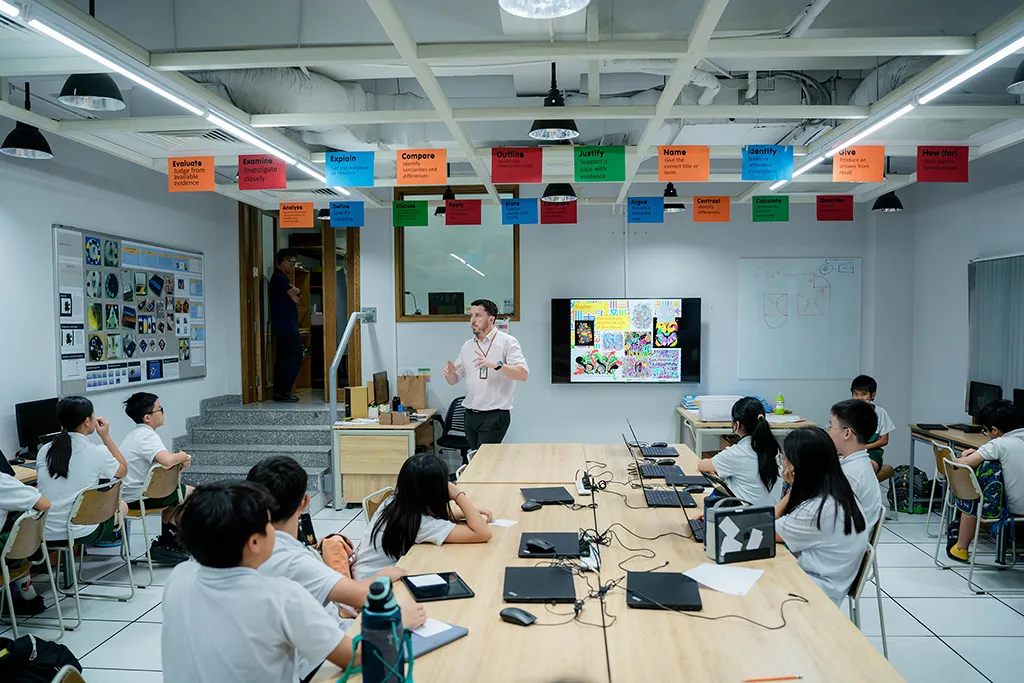
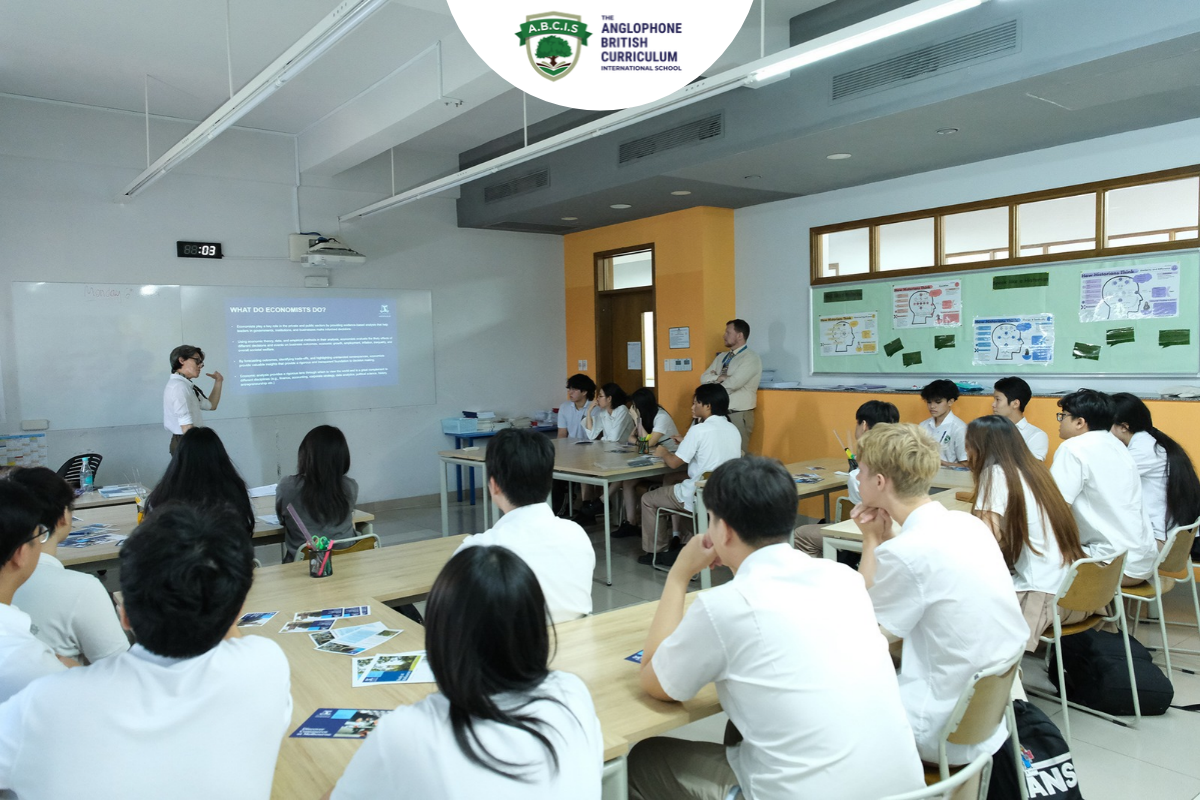
At the ABC international school (ABCIS), we do not treat careers as a Year 12 topic. Subject choice conversations start well before Key Stage 4, because that is when the first doors open and close.
Guidance also means being told no occasionally. If a plan does not match your grades, we say so in Year 11, not Year 13.
Support Through Sixth Form
Dedicated university guidance runs alongside the academic timetable rather than after it. Applications, references and interview preparation are planned from Year 12.
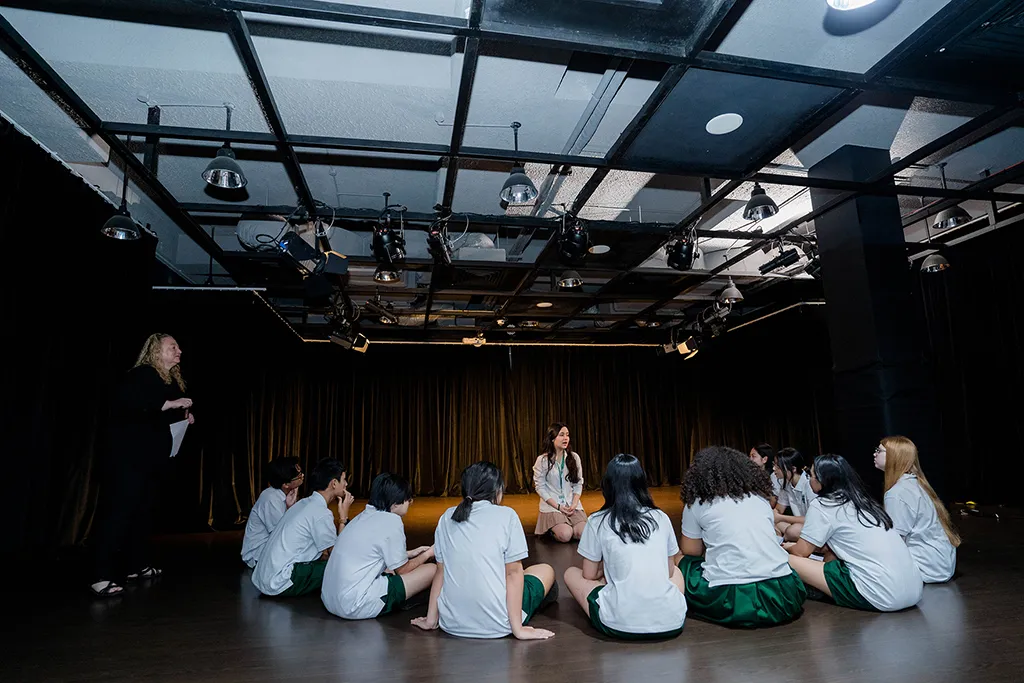
Leadership roles, Model United Nations and the International Award give you evidence to write about. We treat these as part of the application, not as decoration.
Where Our Students Go
Over 95% of our students progress to university each year. The university pathways they take run through the United Kingdom, United States, Australia, Canada and Korea.
Start Early, Stay Flexible
You are not being asked to pick a life at 15. You are being asked to keep good options open and test a few of them properly.
Start with what you are genuinely good at. Check what it requires, try it in practice, then write the plan down and revisit it.
Explore our sixth form programme to see how we guide subject choice and university applications. If you would like to talk it through, your parents can contact our admissions team.
- Trung Son Campus: #152-158, Street No. 1, Trung Son, Binh Hung Commune, Ho Chi Minh City, Vietnam
- Nha Be Campus: #2, Street No. 9, Tan An Huy, Nha Be Commune, Ho Chi Minh City, Vietnam
- Phone: +84 (0)28 7308 1828
- Email: office@theabcis.com
Frequently Asked Questions
No. You need a direction specific enough to act on this term. A plan at sixteen is a working hypothesis, not a commitment.
Year 7 is not too early to explore, though nothing is binding yet. The first decisions that genuinely narrow your options arrive at 14, with iGCSE subject choice.
Have the conversation early and explain your reasoning rather than only your conclusion. Evidence helps: entry requirements, work experience and what the job actually involves.
Yes, within limits. Most schools allow subject changes in the first few weeks of Year 12. After that, switching usually means catching up substantial content.
They are useful for starting a conversation, not for settling one. Treat any result as a prompt to reflect, never as a verdict on what you should do.
It is the fastest way to test an idea. A week in a workplace tells you more than months of reading. You learn whether the daily reality suits you.